


Inflation across Europe is cooling. But for millions of households, the cost of living in Europe still feels stubbornly high. If prices are stabilising, why doesn’t everyday life feel any easier?
Disclaimer
The analysis in this article is based on official Eurostat data covering all EU-27 countries, including inflation (HICP), electricity prices, housing cost overburden rates, and labour cost indicators. The purpose is analytical and informational only and does not constitute financial, economic, or policy advice. While the data reflect the latest available releases as of February 2026, statistical revisions may occur.
Introduction
Headline inflation in the European Union has fallen sharply from its 2022 peaks. In many countries, annual rates are now back near levels considered “normal” by historical standards. On paper, the crisis phase appears to be over.
And yet, the lived experience tells a different story.
Grocery bills remain elevated. Electricity costs are structurally higher than they were before the energy shock. Housing pressure continues to strain household budgets. At the same time, wages are rising — but productivity growth is weak, limiting real purchasing power gains.
So the contradiction persists: if inflation is slowing across the EU-27, why does the cost of living in Europe still feel so high?
To answer that question, we look beyond the headline number — and examine the structural forces shaping everyday expenses across all 27 member states.
For the full category-by-category framework behind these pressures, see Cost of Living in Europe 2026: A Complete Breakdown by Category.
The Official Picture: Inflation Is Cooling Across the EU-27
According to the latest Harmonised Index of Consumer Prices (HICP), annual inflation in the European Union has declined significantly from its 2022 peaks. Based on the most recent available monthly data, the EU-27 aggregate rate is now close to levels historically associated with price stability, although inflation remains above the European Central Bank’s 2% medium-term target in several member states.
The crisis phase of double-digit inflation has clearly passed. But that does not mean prices have returned to where they were.
Inflation measures the rate of change in prices — not the level of prices themselves. A lower inflation rate simply means prices are rising more slowly than before.
A simple example illustrates the point:
If prices rose 10% in 2022 and 5% in 2023, a 2% increase in 2024 does not reverse those earlier gains. It compounds on top of them. The cumulative price level remains significantly higher than it was three years ago.
This distinction is critical.
Across the EU-27, the moderation in headline inflation signals stabilisation, not reversal. Households are no longer facing accelerating price growth — but they are adjusting to a structurally higher cost base.
And this is where the perception gap begins.
The key question is not only whether inflation is slowing, but whether wage growth has been sufficient to offset the cumulative price shock of the past three years.
Because if income has not fully caught up with the new price level, the cost of living in Europe will continue to feel elevated — even in a lower-inflation environment.
For a broader cross-country benchmark that combines prices, income, and structural pressure, see Cost of Living Index Europe.
Food Inflation Still Hits Harder Than the Average
Headline inflation is an average across hundreds of goods and services. But households do not experience inflation as an average. They experience it through recurring purchases — and food is one of the most frequent.
Across the EU-27, food inflation has often moved differently from the headline index since the 2022 price shock. Even as overall inflation has moderated, the annual rate of change for food and non-alcoholic beverages has, in many member states, remained above the aggregate figure.
That divergence matters.
Under the HICP methodology, food and non-alcoholic beverages form a distinct sub-index with a significant weight in the overall consumer basket. Sustained price increases in this category therefore have a material impact on overall cost-of-living dynamics — both statistically and psychologically.
Food is not discretionary spending. It cannot be postponed. And unlike durable goods, it is purchased weekly — sometimes daily. Even moderate increases compound quickly in household perception.

A simple cumulative example illustrates the point:
If food prices increased sharply in 2022 and continued rising in 2023, even a slower rate of growth in 2024 leaves the price level permanently higher. A deceleration in inflation does not erase the earlier adjustment.
This helps explain a common question:
Why do groceries still feel expensive in Europe even when inflation is falling?
Because essential consumption categories do not necessarily move in perfect alignment with the overall index. And when their price levels have already shifted upward, households continue to feel the effect long after headline inflation has stabilised.
In short, moderation in the aggregate rate does not automatically translate into relief at the checkout counter.
And beyond groceries, there is another category that shapes everyday perception even more strongly: fixed household costs.
A more direct answer sits in Why Food Feels Expensive Even When Inflation Is Slowing.
Electricity Prices Remain Structurally Higher
Energy prices were at the centre of Europe’s inflation shock. While wholesale markets have stabilised since 2022, household electricity prices across the EU-27 remain structurally elevated compared with pre-crisis levels.
According to Eurostat’s bi-annual retail electricity data (band DC: 2,500–4,999 kWh, all taxes and levies included), price levels in the second half of 2024 remain materially above those recorded in 2020.
This distinction is important.
Electricity inflation has slowed. But electricity prices have not returned to where they were before the energy crisis.
For a country-by-country comparison of household bills under a harmonised benchmark, see Europe Utility Costs: Electricity and Gas Compared Across the EU-27 (Taxes Included).
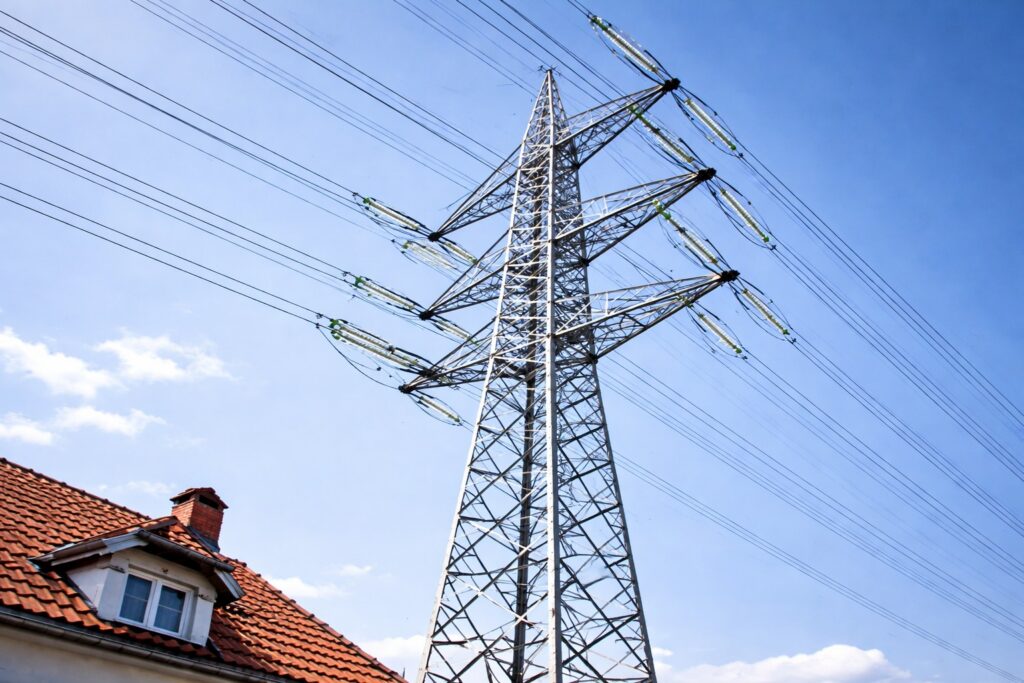
For illustration, the EU aggregate price level for this consumption band was roughly around the low-€0.20 per kWh range in 2020, compared with levels closer to the high-€0.20 range in 2024. Even without exact cent-level comparisons, the structural shift is clear: the baseline has moved upward.
The dispersion across the EU-27 is substantial:
- In some member states, household electricity prices exceed €0.35 per kWh.
- In others — often where regulatory frameworks or price interventions are in place — prices are closer to €0.10–0.15 per kWh.
- Many countries cluster between €0.20 and €0.30 per kWh.
This wide range illustrates why the cost of living in Europe cannot be captured by a single aggregate figure.
Electricity is a recurring household expense with limited short-term substitutability. It is embedded in heating, lighting, cooking, and increasingly mobility. It is also billed regularly, reinforcing its visibility in household budgets.
Even if the rate of price growth moderates, a permanently higher price level resets the budgeting baseline.
And energy costs do not operate in isolation. They feed into food production, transport, and services, contributing to broader cost structures across the economy. The acute phase of the energy shock may have passed, but its structural imprint remains embedded in price levels.
Which brings us to the most persistent and socially sensitive fixed cost of all: housing.
Housing Cost Overburden in the EU-27
If food shapes perception and electricity reinforces recurring pressure, housing defines structural constraint.
Unlike energy or groceries, housing costs are not short-term price movements. They are contractual, long-duration obligations — rent, mortgages, and utilities tied to occupancy. Once they rise, adjustment is typically slow, and the impact tends to persist.
According to Eurostat’s housing cost overburden indicator (the share of the population spending more than 40% of disposable income on total housing costs), a meaningful portion of households across the EU-27 continue to face elevated housing pressure.

At the EU aggregate level, the overburden rate has fluctuated in recent years but remains structurally present. Beneath that average lies substantial dispersion:
- In some member states, fewer than 5% of households exceed the 40% income threshold.
- In others, double-digit shares of the population remain housing-cost overburdened.
- In certain economies, pressure is particularly concentrated in urban rental markets.
This dispersion matters more than the aggregate figure.
Housing costs typically adjust more slowly than volatile consumer goods prices, but when they move, the impact is persistent. Rent levels are influenced by supply constraints and demographic pressures. Mortgage servicing costs depend on interest rate structures — fixed versus variable — and on borrowing conditions that, in many jurisdictions, remain tighter than before 2022.
Housing-related expenditures represent the largest component of household consumption in most EU economies under the COICOP classification framework. That means even moderate increases in rent or financing costs can materially affect perceived financial stability.
In practical terms:
If wages rise 4% but rent rises 6%, the household does not experience stabilisation — it experiences compression.
This is why housing plays a central role in the cost-of-living narrative. Inflation may decelerate, energy prices may stabilise, and food price growth may slow — but if housing remains structurally tight, the sense of financial pressure persists.
For a more direct look at how rent pressure diverges across capital-city markets, see Average Rent in Europe by Country (2026 Housing Data).
Across the EU-27, the pattern is not uniform. Some countries combine moderate inflation with relatively low housing overburden rates. Others exhibit stable inflation alongside sustained housing stress. In a few cases, both pressures coexist.
And this brings the analysis to the final structural layer: income dynamics.
Because if wages do not meaningfully outpace cumulative price adjustments — particularly in housing — the cost of living in Europe will continue to feel elevated, regardless of what the headline index reports.
The Wage Illusion: Rising Nominal Pay vs Real Purchasing Power
If inflation is slowing and housing pressure varies across the EU-27, the natural next question is straightforward:
Are incomes catching up?
Across much of the European Union, nominal compensation per employee has increased in recent years. Eurostat data show rising compensation levels alongside increasing nominal unit labour costs (ULC) in many member states.
It is important to distinguish these concepts.
Unit labour cost reflects compensation relative to output — that is, labour cost per unit of productivity. It captures both wage dynamics and productivity performance. It is not identical to negotiated wage growth or average earnings alone.
In several economies, nominal compensation growth has approached or, in some cases, exceeded prevailing headline inflation rates. On the surface, that suggests stabilisation in purchasing power.
But nominal growth is only part of the story.

Eurostat’s data on real labour productivity per person show that productivity growth across the EU-27 has been modest in recent years. In some member states, it has stagnated. In others, it has fluctuated around zero. Only a limited number of economies have recorded sustained, robust gains.
When compensation rises faster than productivity, unit labour costs increase. That dynamic does not automatically translate into higher living standards. It can instead contribute to sustained price pressures in the broader economy.
Illustratively:
If nominal compensation increases by 5% while productivity rises by only 1%, labour cost per unit of output increases. Without corresponding efficiency gains, the room for durable real income expansion becomes constrained.
This is the structural tension behind what might be called the wage illusion.
Households may observe higher nominal pay. Yet if cumulative price levels — particularly in food, energy, and housing — have already shifted upward, and if productivity growth remains limited, the perceived improvement in financial position may be modest.
That is also why An Average Salary in Europe Doesn’t Mean What You Think matters when comparing financial reality across countries.
In several EU-27 economies in 2024, nominal unit labour cost growth remained materially above real productivity growth. That gap does not imply crisis. But it does imply structural pressure.
Sustainable real wage gains require productivity expansion. Without it, rising nominal incomes can coexist with persistent cost-of-living strain.
And that helps explain why the cost of living in Europe can still feel elevated — even in an environment where inflation is no longer accelerating and compensation levels are rising.
Four Structural Cost-of-Living Profiles Across the EU-27
The cost of living in Europe is not uniform. It does not move in a single direction, nor does it affect all member states in the same way.
When inflation, food prices, electricity costs, housing overburden, compensation dynamics, and productivity trends are assessed together, four broad structural profiles emerge across the EU-27.
These are not rankings. They are economic patterns.
1. Structurally Elevated Cost Base + Weak Productivity Momentum
In this profile, household electricity prices are relatively elevated, housing markets remain tight, and nominal labour costs have risen faster than productivity.
The result is a structurally elevated cost base combined with limited efficiency gains.
In such environments:
- Headline inflation may be moderating,
- Nominal compensation may be rising,
- But subdued productivity growth constrains durable improvements in purchasing power.
Several larger Western and Northern European economies fit aspects of this profile in 2024 — though not uniformly across all indicators.
The pressure here is not acute inflation. It is structural compression.
2. Rapid Nominal Adjustment + Elevated Price Sensitivity
In parts of Central and Eastern Europe, nominal compensation and unit labour costs have increased at relatively strong rates in recent years.
At the same time:
- Food inflation has frequently remained comparatively elevated,
- Electricity prices, while sometimes lower in absolute terms, represent a larger share of disposable income,
- Housing affordability pressures vary but can intensify in specific urban markets.
These economies are undergoing rapid nominal adjustment. However, perception may lag if cumulative price shocks were significant.
The structural challenge here is convergence under volatility.
3. Moderate Price Levels + Limited Income Cushioning Capacity
In another group of member states, absolute electricity prices and housing overburden rates may appear moderate by EU standards.
However, disposable income levels are also lower relative to the EU average.
In these cases:
- Even moderate price increases can represent a meaningful budgetary shift,
- Food and energy expenditures absorb a larger share of household consumption,
- The margin for discretionary spending remains narrower.
The structural constraint is not extreme inflation — it is limited income buffering capacity against cumulative price adjustments.
4. Contained Price Pressures + Stable Housing Burden
A smaller subset of EU economies combines relatively contained electricity prices, moderate housing overburden rates, and steadier productivity dynamics.
In these environments:
- Inflation moderation translates more visibly into stabilisation,
- Nominal compensation gains are less offset by fixed-cost pressures,
- Household sentiment may align more closely with aggregate indicators.
Even here, cumulative price increases since 2022 remain embedded in the system.
Why This Typology Matters
The cost of living in Europe cannot be reduced to a single inflation figure.
Two countries with similar headline inflation rates can produce very different household experiences depending on:
- The composition of price pressures,
- The structure of housing markets,
- The trajectory of productivity,
- And the relative weight of energy and food in household expenditure.
This is why the perception gap persists.
It is not that official data are incorrect. Rather, aggregate indicators compress structural diversity across the EU-27.
Inflation has slowed. But cost structures, income dynamics, and productivity performance continue to vary significantly — and those differences shape how economic conditions are experienced at household level.
Why the Numbers and Reality Diverge
If inflation is slowing across the EU-27, wages are rising in nominal terms, and energy markets have stabilised, why does the cost of living in Europe still feel elevated?
The divergence can be explained through three structural mechanisms.
Inflation Measures Speed — Not the Price Level
Inflation reflects how quickly prices are increasing, not whether prices are returning to previous levels.
When annual inflation falls from double digits to levels closer to central bank price-stability targets, the pace of increase slows. But the cumulative price adjustment from earlier years remains embedded.
If food, electricity, and housing costs rose sharply in 2022 and 2023, a lower inflation rate later does not undo that shift. It compounds on top of it.
Households experience price levels. Statistical releases report rates of change.
That difference alone explains a large part of the perception gap.
Fixed Costs Reset the Household Baseline
Energy and housing are not marginal purchases. They are structural components of household expenditure.
Electricity prices across the EU-27 remain above pre-2021 levels. Housing-related expenditures represent the largest share of consumption in most member states. Even moderate increases in these categories materially alter budgeting constraints.
Once fixed costs move upward, adjustment is slow. Rent contracts do not automatically reverse. Mortgage servicing costs depend on interest rate structures. Energy pricing regimes may stabilise, but not necessarily return to earlier baselines.
This creates what can be described as a new cost floor.
Even with moderating inflation, households are operating within a structurally higher expense framework than they were three years ago.
Productivity Constraints Limit Real Income Expansion
Nominal compensation growth has accelerated in many EU economies. However, productivity growth has been modest.
When compensation per employee rises faster than output per person, unit labour costs increase. Without sustained productivity gains, durable real wage growth becomes more difficult to achieve.
Illustratively:
If nominal incomes rise but price levels have already adjusted upward — and productivity growth remains limited — the improvement in purchasing power may feel incremental rather than transformative.
This is not a crisis dynamic. It is a structural one.
And structural adjustments tend to persist.
Conclusion: A Higher Baseline, Not a New Shock
Europe is no longer in the acute inflation phase seen in 2022.
Headline inflation has moderated across the EU-27. Energy markets are less volatile. Nominal compensation growth has strengthened.
But the cumulative price level has shifted upward.
Food costs, electricity bills, and housing expenditures now operate from a higher base. Productivity growth has not been strong enough to generate rapid real income expansion across most member states.
The result is not accelerating inflation — but a structurally elevated cost environment.
That is why the cost of living in Europe can still feel high, even when inflation is falling.
The data are not misleading. They measure a different dimension of economic reality.
Households feel the level. Statistics report the rate.
And in the current economic environment, that distinction continues to matter.
For a more practical look at how those higher price levels show up in everyday budgets, read The Hidden Costs of Daily Life in Europe Most People Don’t Notice.
Key Takeaways
- Inflation across the EU-27 has slowed, but cumulative price levels remain higher than before 2022.
- Food inflation has frequently diverged from headline figures, reinforcing household perception of pressure.
- Electricity prices remain structurally above pre-crisis levels in many member states.
- Housing-related expenditures continue to absorb a large share of disposable income across the EU.
- Nominal compensation growth has increased, but modest productivity gains limit durable real income expansion.
- The divergence between statistical stabilisation and lived experience is structural, not statistical.
Methodology & Sources
This analysis covers all 27 European Union member states and is based exclusively on official Eurostat datasets. The objective is to compare structural cost-of-living dynamics rather than short-term volatility.
Unless otherwise stated, the latest available data as of February 2026 were used.
Inflation (Headline and Food)
Dataset:
HICP – Monthly data (annual rate of change)
Code: prc_hicp_manr
Indicators used:
- All-items HICP (annual rate of change)
- Food and non-alcoholic beverages (annual rate of change)
Methodological notes:
- HICP is harmonised across EU member states under a common statistical framework.
- Rates refer to year-on-year percentage change.
- Headline inflation reflects the weighted average of all consumption categories.
- Food inflation refers specifically to the COICOP sub-index for food and non-alcoholic beverages.
- The analysis focuses on recent monthly observations rather than long-term historical averages.
Electricity Prices
Dataset:
Electricity prices for household consumers – bi-annual data
Code: nrg_pc_204
Specification used:
- Consumption band DC (2,500–4,999 kWh)
- All taxes and levies included
- Unit: Euro per kWh
- Latest available semester (2024-S2)
Methodological notes:
- Prices represent retail household tariffs, including VAT and other levies.
- Data reflect regulated and market-based pricing structures depending on the member state.
- EU aggregates are used illustratively; cross-country dispersion is emphasised.
- Semester data are not seasonally adjusted.
Housing Cost Overburden
Dataset:
Housing cost overburden rate
Code: tespm140
Definition:
Share of the population spending more than 40% of equivalised disposable income on total housing costs.
Methodological notes:
- Based on EU-SILC survey data.
- Includes rent, mortgage interest, utilities, and other housing-related expenses.
- Refers to disposable income after social transfers.
- Annual frequency.
- Structural comparison across countries; no ranking methodology applied.
Nominal Unit Labour Costs
Dataset:
Labour productivity and unit labour costs
Code: nama_10_lp_ulc
Indicator used:
Nominal unit labour cost based on persons
(Percentage change on previous period)
Definition:
Ratio of compensation per employee to real labour productivity per person employed.
Methodological notes:
- ULC captures both wage dynamics and productivity effects.
- It is not equivalent to average wage growth.
- Used in this article as an indicator of cost pressure within the production structure.
Real Labour Productivity
Dataset:
Labour productivity and unit labour costs
Code: nama_10_lp_ulc
Indicator used:
Real labour productivity per person
(Percentage change on previous period)
Definition:
Real GDP per person employed.
Methodological notes:
- Measures output efficiency.
- Used to assess whether nominal compensation growth is supported by productivity gains.
- Annual frequency.
Analytical Framework
This article does not construct a composite cost-of-living index.
Instead, it examines five structural components:
- Headline inflation (rate of change)
- Food price inflation (essential consumption pressure)
- Electricity prices (fixed energy costs)
- Housing cost overburden (structural affordability constraint)
- Compensation and productivity dynamics (income sustainability)
The purpose is to explain divergences between statistical stabilisation and household perception, not to rank member states or evaluate policy effectiveness.
All data are subject to future revisions by Eurostat.
Data extracted in February 2026; latest available release at time of publication.
Frequently Asked Questions (FAQ)
Why does cost of living still feel high if inflation is falling?
Even when inflation slows, prices usually do not fall — they simply rise more slowly.
If prices increased sharply in 2022 and 2023, a return to low single-digit inflation does not reverse those increases. It compounds on top of them.
That is why the cost of living in Europe can still feel elevated even when official inflation data show stabilisation.
What is the difference between inflation and cost of living?
Inflation measures the rate of change in prices.
Cost of living refers to the absolute price level households must pay for essentials like housing, food, and energy.
Inflation can fall while the cost of living remains high — because the price level itself does not reset.
Why is food inflation often higher than headline inflation?
Food and non-alcoholic beverages are measured as a separate HICP sub-index.
In many EU member states, food inflation has frequently diverged from headline inflation since 2022.
Because groceries are purchased frequently, households perceive these increases more directly, which strongly affects cost-of-living sentiment.
Have electricity prices in Europe gone back to pre-2022 levels?
In most EU countries, electricity price growth has slowed.
However, retail electricity prices (band DC, all taxes included) remain above 2020 levels in many member states.
Energy markets may stabilise, but the structural price base often remains higher than before the energy crisis.
What is the housing cost overburden rate?
The housing cost overburden rate measures the share of the population spending more than 40% of disposable income on total housing costs.
It includes rent, mortgage interest, utilities, and related housing expenses.
This indicator helps explain why housing plays such a central role in the perceived cost of living in Europe.
Are wages keeping up with inflation in Europe?
Nominal compensation per employee has increased across many EU countries.
However, real purchasing power depends on whether wage growth exceeds cumulative inflation and whether productivity growth supports those increases.
Even when wages rise, households may still feel pressure if the price level remains structurally elevated.
Why do official statistics sometimes feel disconnected from daily life?
Official inflation data are statistically accurate.
The perception gap arises because:
Essential categories (food, housing, energy) carry heavy psychological weight
Price levels remain high even after inflation slows
Income growth may lag cumulative price increases
This divergence is structural — not statistical.
Which EU countries have the highest cost of living?
Cost of living varies significantly across the EU-27.
Some higher-income Western and Northern European economies have structurally elevated price levels but stronger income buffers.
Some Central and Eastern European economies have experienced faster nominal adjustments and higher recent volatility.
Rather than a single ranking, the European cost-of-living landscape reflects different structural patterns.
Is Europe facing another inflation crisis?
Current data do not suggest a renewed double-digit inflation shock across the EU-27.
However, structural cost pressures — particularly in housing and energy — remain embedded in the price system.
The challenge is not renewed hyperinflation, but sustained affordability pressure.
Will prices in Europe go back to pre-2022 levels?
In market economies, broad price levels rarely decline significantly across all categories.
While some individual goods may fall in price, overall consumer price levels tend to stabilise rather than reverse.
This means the cost of living in Europe is more likely to plateau than to reset.
Iva Buće is a Master of Economics specializing in digital marketing and logistics. She combines analytical thinking with creativity to make financial and investment topics accessible to a broader audience. At Finorum, she focuses on translating complex economic concepts into clear, practical insights for everyday readers and investors.